
Widening the Frame

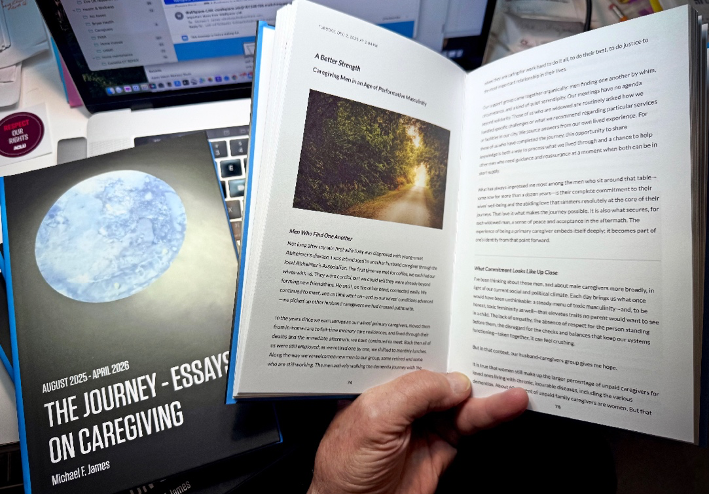
Holding in my hands one of the hard-copy Day One Journal volumes I recently had made to contain in print these Substack essays, I realized that the sense of completion I’d been feeling the last month or so was in fact real. The half dozen copies I had before me were confirmation that I’ve pretty much said what I need or want to say about caregiving and the younger-onset Alzheimer’s journey that reshaped my first marriage and much of my life since.
Between Dear Judy the memoir and these essays here, the ground my late wife and I walked has been thoroughly covered. Maybe not every square inch, but enough. Enough that to keep circling the same terrain now would risk repetition, or worse, self-imitation. There comes a point when returning yet again to an already weighted subject no longer deepens it. Any more chipping away at it risks not only repetition, but the reader’s patience. This realization was cathartic. Time to cross a different threshold.
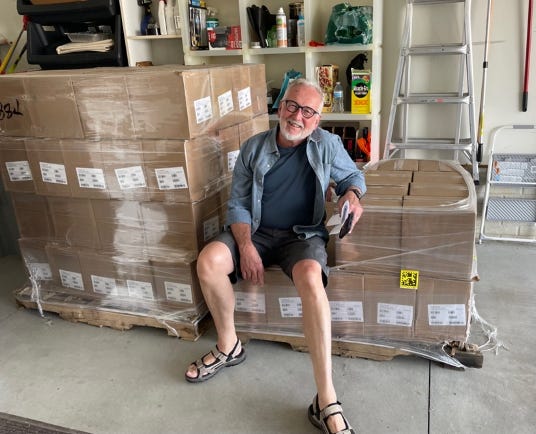
The original motive for beginning this run of essays was straightforward enough. I wanted to help promote the Kindle edition of Dear Judy that appeared belatedly last summer. I also wanted, candidly, to avoid leaving my survivors the burden of stacks boxes of unsold physical books in the basement. Thoreau’s biographer Laura Dassow Walls has him joking mordantly in October 1853, on the occasion of a delivery to his home of 706 unsold copies of A Week on the Concord and Merrimack Rivers, that “I have now a library of nearly 900 volumes over 700 of which I wrote myself.” (LDW, Henry David Thoreau: A Life, p. 343). Thoreau’s awkward position had no more appeal for me than it did for him.
My motives were practical, certainly not grand nor literary, but practical motives sometimes set larger things in motion. Over these past months, the essays took on a life beyond promotion. They became an extension of the memoir, a way to revisit aspects of the caregiving years from slightly different angles. They also helped to solidify a regular writing practice, something I’ve always wanted but often failed to maintain.
I realized soon enough that the essays were reaching a wider audience, many of whose members were deep into their own caregiving journeys. We draw strength from others’ experiences and draw comfort knowing that others floundered and sometimes failed, but persisted, eventually finding their way through forests of doubt and guilt, to acceptance and growth.
I’m glad I put that work before you. The responses from readers have been heartfelt and moving. Some people found in these pieces exactly what I’d hoped they might find: recognition, affirmation, reassurance. These things matter. But being helpful or useful has its limits as a writerly mandate. So does personal history.
I’ve never wanted to become a permanent custodian of one sorrow, one story, one identity. Caregiving marked me deeply, and permanently. Judy’s illness and death altered the shape of my life and my understanding of love, endurance, grief, and adaptation. None of that will ever disappear. But neither do I want to remain indefinitely enclosed within that chapter, as if the truest thing about me were forever my role in it.
That’s not how life works. It is not how art works either. A subject can be important, even formative, and still become exhausted. Or perhaps the writer, or painter, becomes exhausted by it. The distinction hardly matters. At some point one feels, if not boredom exactly, then a diminishing return. One senses that further excavation will not produce richer ore. It will only yield finer gradations of the same material I’ve already, and painstakingly, brought to light.
So the question becomes: where to next? Not, I think, toward some abrupt disavowal of what’s been written here. I’m not interested in declaring a neat farewell to caregiving and grief, then turning blithely toward brighter things. That would be false. The caregiving years remain central to the architecture of memory that I live within. They remain one of the major educations of my life. But I do feel a growing desire to widen the frame, to let this Substack become less exclusively about one past ordeal and more about what engages my attention now.
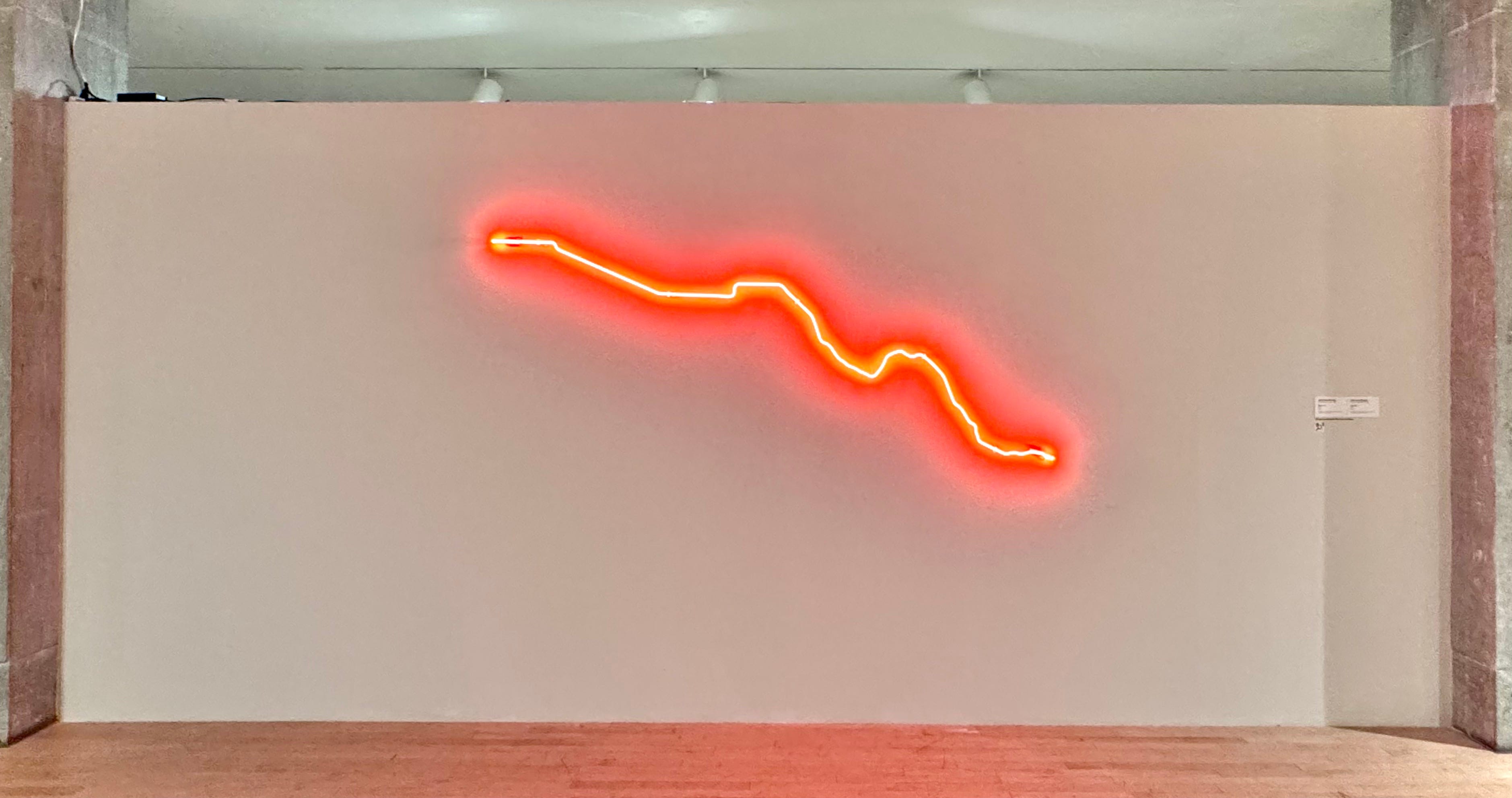
That means art, certainly. It means the disciplines of looking and gathering. It means the challenges, satisfactions and frustrations of making, and what purposes art making serves in a world that often feels as if it’s falling apart. It means sustenance—books, exhibitions, travel, music, good food. It also means relationships, introspection, public life, moral disturbance, and the nagging question of how one goes on trying to live with integrity in this damaged world.
It may also mean uncertainty, and I’m trying to make peace with that. I’ve been in life’s end zone now for a while—I don’t mean that to sound fatalistic or defeated. In one week recently I read local newspaper obituaries of four former university colleagues, three of whom I’d worked with in various capacities. I’m nearing my seventy-seventh birthday. I’m just being realistic.
One thing I’ve learned over a lifetime of studio practice is that you do not always know, at the end of one body of work, what the next body of work will be. Sometimes the only honest thing is to admit that a previous subject has run its course and that the new one has not yet fully declared itself. There’s usually an interval in which one is simply paying attention, waiting for the next cluster of urgencies to gather and begin exerting pressure. Composers, painters, poets, writers—none are exempt from that. Nor should they be. Good ones don’t want to be.
In the present cultural climate, of course, there’s another complication. Substack is noisy. Very noisy. It sometimes feels like walking into a crowded and bustling new restaurant that’s just had a glowing review. The volume is high as diners chatter and schmooz, sharing hundreds of stories that careen all over the place, sometimes colliding. Once settled before you, the dinner plate may look and smell as appealingly as the menu’s description of it suggested, but actually enjoying it, savoring it, is bound to be met with defeat.
Much of the online writing world is like that trending restaurant. More and more of it also bears the unmistakable smoothing and flattening effects of artificial intelligence. It’s troubling. The cadence (one word among many that A.I. favors) is familiar by now: the tidied transitions, the predictable uplift, the brittle fluency, the faint but unmistakable scent of unwavering reassurance. Even when the original thought belongs to a human being—and, more weakly, an original “prompt”— the language too often emerges scrubbed of idiosyncrasy and risk, polished and correct in the tradition of the outwardly dependable and conformist central casting Midwesterner.
I’m not a purist about tools. I’ve used A.I. as an editorial instrument myself, and not always unwisely. But it’s one thing to use a tool and another to surrender one’s sentences to it. Voice isn’t gloss or decoration. Voice is thought’s breath. It resonates only when the writer creates a barometric event: when opposing currents and pressures, contrasting verbal energies and emotional forces insist on taking a side, holding a moral position. Non-sentient intelligence is homogenized, and what it creates may be competent, but it’s not fully one’s own. Its allegiance is to the broadest common denominator.
I have no desire to add to the great online midden—that’s a dunghill, to save you reaching for your O.E.D. — of competent, mediocre prose. If I continue here, and I expect I will, I want my writing to move more intentionally toward what most fully engages me in the moment. Less guidance or instruction. Less backtracking. More curiosity. More scope. More contact with the things that continue to provoke thought and feeling: the visual world, the built world, the political world, the natural world, the world of memory and remarriage and aging and unresolved ambitions.
To put it another way: not moving on but widening. That seems to me the bolder task of this later stretch of life: not to remain faithful to an identity because it was once entirely immersive, but to remain faithful to one’s deepest habits of attention. Those habits existed before caregiving, persisted through it, and survive after it. They are the connective tissue. They are what make another phase of writing possible.
So this is not an ending, exactly. It’s a recognition that one body of material has reached its natural limit, and that if I keep writing here, what feels right is to give the work more space, more room to breathe.
Maybe this is enough for now. No new manifesto, no articulated itinerary, just a need and willingness to step from one familiar passageway and see what a broader topography might offer. It may come to you under a different rubric, a modified header—I’m mulling that over right now. Whatever that will look like, I promise to bring to it the same sincerity that has driven everything that’s preceded it.
Love this piece of writing so much. You offer much insight to the artist whose practice shifts.
How do I go about purchasing a physical a copy of essays/book?